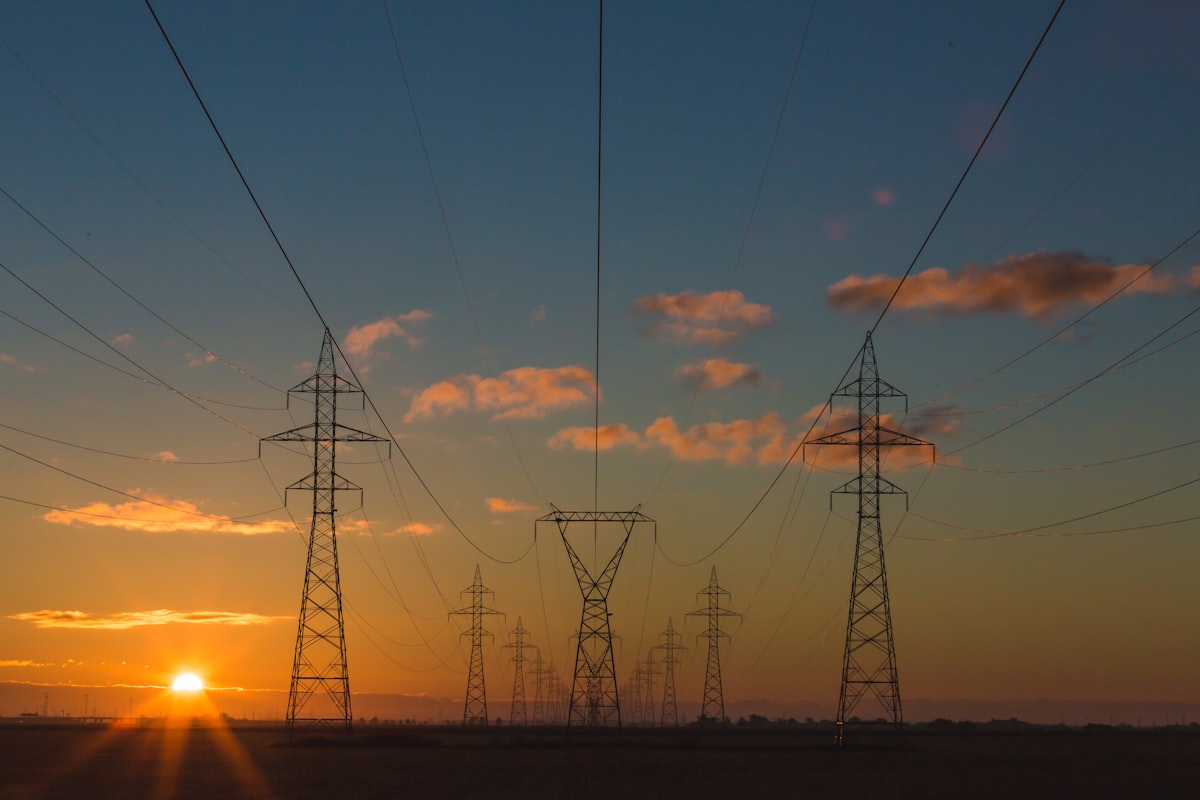
Medium and low voltage transmission lines are the backbone of electrical distribution networks. Understanding how they work is essential for anyone involved in infrastructure development or facility management.
Understanding Voltage Levels
MV (Medium Voltage) typically refers to 11kV to 33kV systems used for primary distribution from substations to transformers. LV (Low Voltage) refers to 400V/230V systems that deliver power directly to homes and businesses.
Key fact: Rwanda's distribution network operates at 33kV for primary distribution, stepped down to 11kV, then to 400V/230V for end users.
MV Overhead Line Components
- 01. Poles — wooden, concrete, or steel structures supporting conductors
- 02. Conductors — ACSR (Aluminum Conductor Steel Reinforced) cables
- 03. Insulators — ceramic or polymer components preventing current leakage
- 04. Cross-arms — horizontal supports for insulators
- 05. Transformers — step-down voltage from MV to LV
- 06. Protection devices — lightning arresters, fuses, circuit breakers
LV Distribution Networks
LV systems distribute power from transformers to end users through overhead or underground cables. Components include distribution boards, metering systems, and protection devices. Proper design ensures voltage stability, load balancing, and fault protection.
Xi-TEK expertise: We design, install, and maintain MV overhead lines, LV distribution networks, and substations. Our team is certified for work up to 33kV.